









Talk to Us
Schedule a quick meeting with one of our experts.


Security Operations Centers were built to detect, investigate, and coordinate response across enterprise environments. That mission remains unchanged. What has changed is the speed, scale, and complexity at which this mission must now be delivered.
Modern attacks increasingly span identities, endpoints, SaaS platforms, cloud workloads, APIs, and human behaviour, often unfolding across fragmented signals that no single analyst or tool can fully correlate in real time.
At the same time, attackers are increasingly using AI to accelerate reconnaissance, support exploitation workflows, generate phishing campaigns, and improve operational decision-making. This is changing the cybersecurity equation.
The future SOC is no longer defined only by alert monitoring or workflow automation. It is evolving into an Agentic SOC: a human-commanded, agent-operated, and governance-controlled operating model where AI agents collect evidence, reason across context, recommend actions, execute approved workflows, and generate audit-ready documentation under defined oversight.
The shift is not about replacing analysts. It is about enabling autonomous cyber defense at the scale, speed, and complexity modern enterprises now require.
Security Operations Centers are not new to transformation. Mature SOCs have never been only about closing alerts. Their real purpose has always been to understand risk, validate evidence, coordinate response, assign accountability, and reduce business impact.
What is changing now is the execution environment.
The challenge is not that SOCs suddenly need to become risk-led. Mature SOCs have been moving in that direction for years. The challenge is that these outcomes now need to be delivered with a level of speed, scale, and consistency that manual coordination alone can no longer sustain.
This is why the CISO conversation is changing.
Security leaders are no longer asking only how to reduce alert fatigue or automate repetitive playbooks. They are asking how to defend in an environment where AI can accelerate reconnaissance, vulnerability discovery, exploitation support, phishing, malware analysis, and operational decision-making.
As attackers and defenders both move toward AI-enabled execution, the SOC strategy must evolve from adding more tools and workflows to building a governed operating model where human expertise is amplified by intelligent agents.
Recent developments demonstrate why this shift matters.
In November 2025, Anthropic reported disrupting what it described as an AI-orchestrated cyber espionage campaign, where attackers used AI’s agentic capabilities not merely for advice, but to execute portions of the attack workflow itself. According to Anthropic, AI was used across reconnaissance, vulnerability discovery, exploitation support, and operational documentation, with humans supervising selected decision points.
On the defensive side, Anthropic’s Project Glasswing provides selected partners access to Claude Mythos Preview to identify and remediate vulnerabilities in foundational systems, including local vulnerability detection, black-box binary testing, endpoint security, and penetration testing. Reuters further reported in May 2026 that Anthropic began allowing Project Glasswing partners to share cybersecurity findings discovered using Mythos with regulators, government agencies, open-source communities, and external organizations under responsible disclosure practices.
Major security platforms are moving in the same direction. Microsoft announced Security Copilot agents for security workflows in March 2025, including a phishing triage agent designed to handle routine phishing alerts and allow defenders to focus on more complex threats. Google Cloud has similarly described agentic AI in security operations as a model where intelligent agents work alongside analysts, automate routine workflows, accelerate investigations, and support operational decision-making.
These developments point to a clear direction: AI is becoming an execution layer in cyber operations, not just an advisory layer. For CISOs, this changes the SOC strategy discussion. The question is no longer only how to improve analyst productivity, but how to safely govern AI-enabled investigation, response, and assurance at enterprise scale.
The future SOC will not simply be a larger version of today’s SOC. It will increasingly become an Agentic SOC — where human experts command the mission, intelligent agents execute governed workflows, and security operations move closer to machine-speed defense.
| SOC Stage | Operating Model | Primary Constraint | Next Evolution |
|---|---|---|---|
| Traditional SOC | Alert monitoring, manual triage, escalation | High manual effort and tool switching | Automation and enrichment |
| Mature SOC | Risk-led investigation, evidence validation, coordinated response | Human-dependent correlation at scale | Agent-assisted decisioning |
| Agentic SOC | Human-commanded, agent-operated cyber defense | Requires strong governance and trust controls | Semi-autonomous cyber defense |
Figure 1: SOC Evolution Model
Agentic cybersecurity refers to the use of goal-directed AI agents that can reason over context, plan multi-step workflows, gather evidence, recommend actions, execute approved security tasks, and improve through feedback — all within defined governance controls.
This is fundamentally different from traditional automation. A traditional SOAR playbook follows predefined logic: enrich an IP address, create a ticket, notify an analyst, or trigger a fixed workflow. This is useful, but it is also rigid. It performs the steps it was designed to perform, even when the investigation requires a different path.
AI assistance is also different. An AI assistant may summarize an incident, explain a command, or generate a query, but the human analyst still drives the workflow. Agentic cybersecurity goes further because the agent is assigned an objective, not just an isolated task.
For example, instead of asking an AI assistant to summarize a suspicious login, a SOC could task an identity agent to investigate whether the account is compromised. The agent may query identity logs, review MFA results, check device compliance, inspect mailbox activity, correlate SaaS downloads, validate privileged access, review threat intelligence, determine confidence, recommend containment, and prepare an evidence summary.
This agentic model depends on four essential capabilities:
Reasoning allows the agent to interpret security context. Planning allows it to break an objective into investigation steps. Controlled tool access allows it to interact with SIEM, XDR, IAM, email, cloud, and ITSM platforms safely. Memory and feedback allow it to improve from prior cases, analyst corrections, known false positives, and business-specific context.
Agentic cybersecurity is not about giving AI unlimited authority. It is about assigning defined, controlled responsibilities to intelligent agents within governed boundaries.
Traditional SOC models remain valuable. The issue is not that the SOC has failed; the issue is that the operating environment has changed faster than the execution model.
One of the clearest examples is Alert Fatigue. It is often described as a volume problem, but in many cases, it is a context problem. Analysts are not overwhelmed only because there are too many alerts. They are overwhelmed because alerts often arrive without enough business relevance, confidence, enrichment, or recommended response.
A suspicious PowerShell alert, for example, is not enough by itself. The analyst still needs to determine whether the activity was malicious, administrative, deployment-related, or part of a broader compromise. To answer that, they may need to review identity logs, endpoint telemetry, SaaS audit events, cloud control-plane activity, network signals, vulnerability exposure, ITSM records, and threat intelligence.
No single platform usually provides the complete answer. As a result, the analyst often becomes the integration layer across multiple tools. This slows down investigation, increases cognitive load, and makes response quality dependent on individual experience and available time.
This is where the execution model starts to show strain. Mature SOCs already know the right questions to ask, but answering those questions consistently across fragmented signals and fast-moving attacks is becoming harder through manual coordination alone.
In a traditional operating model, Analysts manually collect evidence, investigate alerts, coordinate response actions, and maintain case documentation. While in agentic model, AI agents automate alert enrichment, context gathering, signal correlation, response preparation, and case documentation, while humans retain responsibility for judgment, approvals, and risk decisions.
A practical operating model for the Agentic SOC can be described as:
Sense → Reason → Act → Assure
Sense
The SOC first senses by collecting and normalizing telemetry from across the enterprise environment, including SIEM, XDR, IAM, cloud, endpoint, email, network, SaaS, ITSM, and vulnerability management systems.
Reason
It then reasons by correlating evidence across these sources, assessing risk, determining confidence, and identifying probable attack scenarios. This is where the agentic layer adds value: it connects fragmented signals and converts them into a more complete view of the incident.
Act
The SOC then acts by recommending, staging, or executing response actions based on policy, confidence level, business impact, and approval requirements. Not every action should be autonomous. Some actions can be executed within guardrails, while high-impact decisions must remain human-approved.
Assure
Finally, the SOC assures by validating containment, capturing evidence, measuring effectiveness, and feeding lessons learned back into detection, response, and agentic workflows.
This model does not replace SIEM, XDR, EDR, IAM, SOAR, ITSM, or vulnerability management. It connects them. The agentic layer becomes the reasoning and orchestration layer that turns fragmented signals into governed decisions and measurable security outcomes.
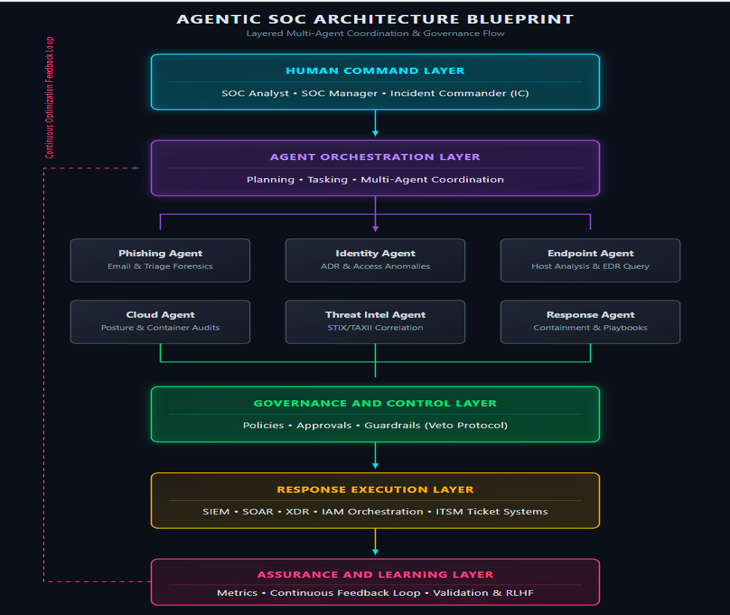
Figure 2: Agentic SOC Reference Architecture
This direction is also reflected in emerging industry architectures. Google Cloud’s 2026 reference architecture describes a high-level multi-agent AI system designed to orchestrate complex investigation and triage processes across security systems such as SIEM, threat intelligence, CSPM, and EDR. This reinforces the idea that the future SOC is not a single AI assistant, but a coordinated agent layer operating across the security ecosystem.
Enterprises are unlikely to achieve autonomous cyber defense through tooling alone. The transition requires more than AI features or isolated automation. It requires integrated telemetry, contextual intelligence, orchestration maturity, governance controls, and strong operational engineering discipline.
This is where the role of a security operations partner becomes important. As organizations move toward agentic cybersecurity models, they need to modernize the underlying SOC foundation first: log source coverage, XDR integration, identity context, cloud visibility, response workflows, automation guardrails, and governance reporting.
Microland is helping enterprises modernize security operations through AI-enabled cyber defense capabilities that that bring together managed SOC services, XDR integration, cloud-native security operations, automation engineering, and governance-led cyber resilience frameworks.
By integrating telemetry across hybrid IT environments and orchestrating response workflows across identity, endpoint, cloud, network, and SaaS ecosystems, Microland enables organizations to move from reactive security operations toward scalable, intelligence-driven cyber defense.
As enterprises explore agentic cybersecurity, governance, trust engineering, and operational assurance become as important as automation itself. The objective is not simply to automate more tasks, but to build a controlled operating model where human experts remain accountable while intelligent agents accelerate investigation, response, evidence generation, and continuous assurance.
Agentic cybersecurity requires a new engineering discipline. It is not enough to deploy a model and connect it to security tools. Enterprises need to design the controlled environment in which agents reason, act, learn, and remain within approved boundaries. This discipline can be described as Harness Engineering.
Detection engineering tells systems what to detect. SOAR engineering tells systems what to execute. Harness engineering tells intelligent agents how to reason, act, learn, and stay within control.
A cybersecurity harness includes the agent’s objective, instructions, tool access, memory, approved skills, playbooks, approval gates, escalation rules, sandboxing, audit logging, and performance metrics. These elements define not only what an agent can do, but also what it must not do.
Tool access is a critical part of the harness. Agents should begin with read-only access, constrained permissions, and monitored execution paths. Action rights should be introduced gradually, only after validation, testing, and governance review.
High-impact actions such as endpoint isolation, account disablement, privileged access changes, or cloud configuration updates must require stronger governance and approval controls. For these decisions, the agent should provide a clear decision summary explaining the proposed action, the supporting evidence, the confidence level, expected business impact, and whether the action can be reversed.
Harness engineering is what converts agentic AI from an exciting capability into a controlled enterprise operating model.
The most important shift in the Agentic SOC is human. Agentic cybersecurity does not eliminate analysts; it changes their role. Analysts move from repetitive evidence collection to supervision, validation, and decisioning. Detection engineers move from writing detection logic to designing how agents should investigate. SOC managers move from queue oversight to governing autonomy, measuring trust, and reporting security outcomes.
| Current Role | Future Role | Shift in Responsibility |
|---|---|---|
| L1 Analyst | Agent Supervisor | From queue triage to validation of agent output |
| L2 Analyst | Threat Validation Lead | From manual investigation to complex case judgment |
| Detection Engineer | Agent Trainer | From rule writing to reasoning-path design |
| SOAR Engineer | Response Policy Engineer | From playbook building to autonomy guardrail design |
| SOC Manager | Autonomy Governance Owner | From queue management to trust and performance governance |
| Incident Commander | Human Decision Authority | From manual coordination to AI-accelerated command |
Figure 3: SOC Roles in Agentic AI world
The more authority agents receive, the more important governance becomes. Agentic systems introduce risks such as incorrect action, automation bias, prompt injection, context manipulation, memory poisoning, excessive privilege, tool misuse, and poor explainability.
Trust cannot be assumed. It must be engineered.
For an Agentic SOC to operate safely, agents must explain their reasoning, show the evidence sources used, expose confidence levels, operate with minimum privilege, and produce audit-ready logs. These controls allow human supervisors to validate not only what the agent concluded, but also how it reached that conclusion.
High-risk actions should always require human approval. This includes actions such as disabling privileged accounts, isolating critical endpoints, changing cloud configurations, modifying firewall rules, or taking action that could affect business continuity.
The accountability rule remains simple:
AI agents can perform work, but they cannot own accountability. The enterprise remains responsible for decisions, controls, and consequences.
Enterprises should not move directly from manual operations to full autonomy. The transition to autonomous cyber defense should be incremental, evidence-led, and governed at every stage.
Phase 1: Foundation
The first step is to strengthen the SOC foundation. This includes improving telemetry quality, entity normalization, CMDB integration, identity mapping, asset context, and workflow alignment.
Without this foundation, agents will not have the reliable context needed to reason accurately or support safe decision-making.
Phase 2: AI Assistance
The next stage is to use AI for analyst productivity. Typical use cases include alert summarization, incident timeline generation, case note drafting, query assistance, threat intelligence summarization, and knowledge search.
This phase helps build analyst confidence and demonstrates value without granting AI any response authority.
Phase 3: Agent-Assisted Investigation
In this phase, agents perform structured evidence collection and recommendations, while humans make final decisions.
Phase 4: Human-Approved Autonomy
Agents can then begin staging response actions such as IOC blocking, endpoint isolation, malicious email removal, or session revocation.
Human approval remains mandatory before execution, especially where there may be business or operational impact.
Phase 5: Guard railed Autonomy
Once trust and evidence quality improve, selected low-risk actions can be executed by agents under defined guardrails. These guardrails should include confidence thresholds, asset exclusions, rollback controls, audit logging, rate limits, and human notification.
Phase 6: Semi-Autonomous Cyber Defense
At the most mature stage, agents handle defined incident classes end-to-end under approved policy, while humans supervise exceptions, ambiguous cases, and high-impact scenarios.
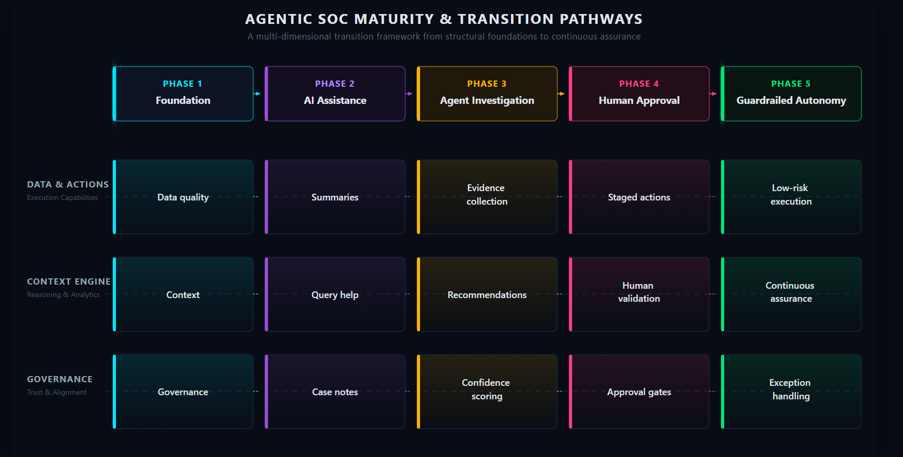
Figure 4: Incremental Roadmap to Agentic Cyber Defense
The SOC is not being reinvented because the past failed. It is evolving because the execution environment has changed.
Mature SOCs have always pursued risk-led, evidence-driven, accountable, and business-aligned cyber defense. Agentic cybersecurity provides a new execution model for delivering those outcomes at greater speed, scale, and consistency.
The rise of AI-orchestrated attacks, Project Glasswing, Claude Mythos Preview, and agentic SOC capabilities from major security platforms all point to the same reality: security operations cannot remain dependent only on manual coordination when both attackers and defenders are moving toward agentic execution.
References
Anthropic - Disrupting the first reported AI-orchestrated cyber espionage campaign, November 2025
Anthropic - Project Glasswing: Securing critical software for the AI era
Anthropic - Expanding Project Glasswing, June 2026
Reuters - Anthropic Mythos access to quadruple to about 200 Glasswing partners, June 2026
Microsoft - Microsoft unveils Microsoft Security Copilot agents and new protections for AI, March 2025
Microsoft Learn - Phishing Triage Agent in Microsoft Defender XDR
Google Cloud - The dawn of agentic AI in security operations at RSAC 2025, April 2025
Google Cloud Architecture Center - Agentic AI use case: Orchestrate security operations workflows, April 2026