











Talk to Us
Schedule a quick meeting with one of our experts.


"Everything was working until name resolution failed."
At 9:07 a.m., employees could not access a business-critical SaaS platform. Customer-facing applications began timing out. The network was healthy. Identity services were operational. Cloud infrastructure showed no warning signs.
The issue wasn't the firewall, the application, or the cloud. It was DNS.
For most enterprise leaders, DNS remains invisible infrastructure, quietly translating names into IP addresses so users and applications can connect to digital services. But in today's hybrid, cloud-first environments, DNS has become a practical and high-value control point for zero trust enforcement, threat detection, and response automation.
Every application request, cloud workload, API call, and web session starts with a DNS lookup.
That means DNS often becomes the first opportunity to determine whether a destination should be trusted.
As organizations advance their Zero Trust initiatives, DNS is emerging as one of the most effective and underutilized control points for enforcing security policy, detecting threats, and improving cyber resilience.
This blog outlines how DNS contributes to enterprise security outcomes, where encrypted DNS changes design assumptions, and how to integrate DNS controls into an architecture that supports visibility, resilience, and automated response.
As enterprises embrace cloud, SaaS, distributed workloads, and hybrid operating models, traditional perimeter-based security is giving way to Zero Trust Architecture (ZTA), built around a simple principle: never trust, always verify.
Most Zero Trust strategies understandably focus on identity, endpoint posture, segmentation, and access controls. Yet one of the earliest and most pervasive control points in a digital interaction is often treated as background infrastructure: the Domain Name System (DNS).
Nearly every digital interaction begins with a DNS query—whether a user accesses a SaaS application, a workload connects to a cloud service, or malware attempts to reach command-and-control infrastructure.
This makes DNS a powerful enforcement point. By evaluating destination risk at the point of resolution, organizations can identify and block threats before a connection is established, extending Zero Trust from reactive detection to proactive prevention.
Zero Trust architectures assume that no request should be inherently trusted based on network location alone. DNS aligns naturally with this model because it sits early in the transaction path and can enforce a policy decision before traffic reaches its destination.
Whether an employee is accessing a SaaS application, a cloud workload is connecting to a service, or malware is attempting to reach command-and-control infrastructure, DNS resolution is typically executed first. This makes DNS one of the earliest opportunities to evaluate intent before a connection is established.
In a Protective DNS architecture, the secure recursive resolver acts as a gatekeeper. It can compare requested domains against approved destinations, deny known malicious infrastructure, or redirect suspicious requests for further analysis. Each query can be evaluated against organizational policies, threat intelligence, user identity, device posture, and the classification of the destination domain.
By positioning defensive checks at this critical initial phase, organizations can move from reactive detection to proactive security, intercepting potential threats before a network handshake is ever completed
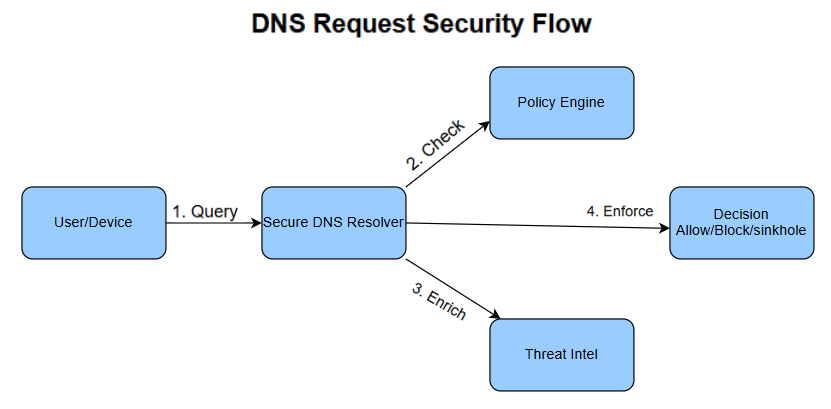
Figure 1. DNS request security flow
DNS is often viewed as a foundational infrastructure service. However, DNS telemetry is highly valuable because it reflects what devices are trying to reach, not just what they successfully connected to.
This visibility can help security teams identify beaconing patterns, domain generation algorithm (DGA) behavior, newly observed destinations, excessive NXDOMAIN responses, suspicious TXT queries, and unusual geographic hosting relationships. These signals often provide early indicators of malicious activity and policy violations.
To extract maximum forensic and analytical value, organizations should capture more than basic DNS logs. Strong DNS logging programs preserve core fields such as timestamp, source IP, user or device identity, queried FQDN, response code, answer set, resolver action, and associated policy hit.
For deeper visibility, enterprises should also capture:
When ingested into a SIEM, this data supports detections for malware staging, phishing campaigns, covert channels, and misconfigurations. DNS logs are especially effective when linked with endpoint detection, proxy records, firewall telemetry, and cloud control-plane events.
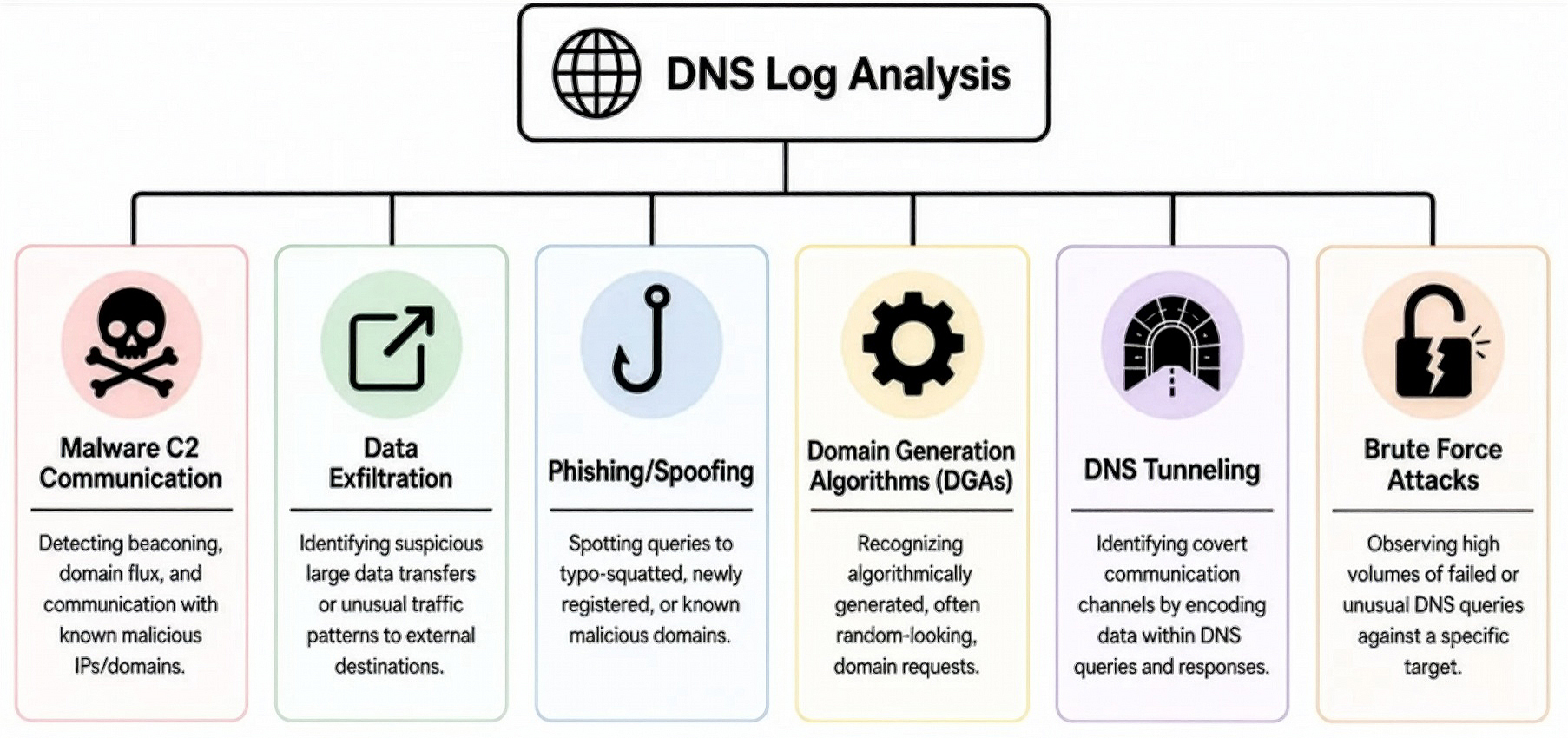
Figure 2: DNS Log Analysis
As DNS becomes integrated into broader security operations, it evolves from a background infrastructure service into a rich source of telemetry for detection, investigation, and response.
"DNS telemetry is often the earliest, quietest signal of compromise."
Protective DNS (PDNS) replaces default, unmonitored recursive routing with a policy-driven approach that evaluates every DNS request before a connection is established. Rather than simply resolving domain names, PDNS applies security and governance controls at the earliest stage of the transaction.
In practice, Protective DNS can enforce policy through multiple mechanisms:
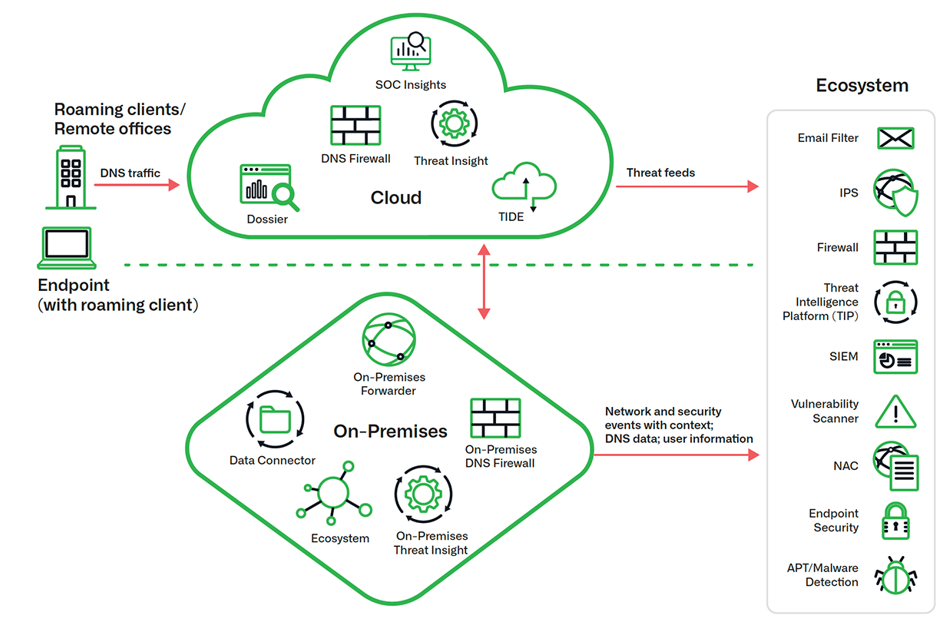
Figure 3: Protective DNS evaluates requests using identity, context, and threat intelligence before allowing access
By applying policy at the DNS layer, organizations can block known malicious destinations, restrict access to high-risk domains, and improve Zero Trust enforcement without adding friction to the end-user experience.
Domain blocking is one of the simplest and most effective security controls available to DNS administrators. When a domain is known to be malicious or violates corporate policy, the resolver can deny resolution outright or redirect the request to a sinkhole.
Sink holing is particularly valuable because it preserves observability. Instead of failing silently, the request is redirected to controlled infrastructure where security teams can record the event, identify affected assets, and assess the potential scope of compromise.
Enterprises should distinguish between tactical blocking, strategic policy categories, and emergency containment. Tactical blocking addresses confirmed malicious indicators, while strategic categories may include malware, newly registered domains, anonymizers, or other high-risk destinations. During an active incident, DNS can also serve as a rapid containment mechanism when other policy enforcement channels may be slower to deploy.
This ability to disrupt malicious activity before a connection is established makes DNS an effective control against phishing campaigns, malware delivery infrastructure, and command-and-control communications. In the case of ransomware, DNS-based controls can help interrupt critical stages of the attack lifecycle by preventing compromised systems from reaching external attacker infrastructure.
DNS over TLS (DoT) and DNS over HTTPS (DoH) improve privacy and integrity by encrypting resolver communications. However, they also change enterprise visibility assumptions. If endpoints bypass approved resolvers and use external encrypted DNS providers directly, organizations may lose policy enforcement and monitoring coverage.
The answer is not to reject encrypted DNS entirely. Instead, enterprises should standardize managed encrypted DNS paths, define approved resolvers, and control endpoint behavior through configuration management, browser policy, mobile device management, and egress filtering where appropriate.
Security teams should also understand how applications embed their own resolvers or fallback behavior, as this can create blind spots if not governed intentionally. The goal is simple: preserve confidentiality without sacrificing enterprise governance.
As DNS becomes increasingly encrypted, successful organizations will focus not on limiting privacy, but on ensuring that security, visibility, and policy enforcement remain intact.
"If every connection starts with a lookup, every lookup is a chance to apply policy."
Protective DNS becomes significantly more effective when integrated with SOC workflows. Resolver logs should feed a SIEM in near real time, where detections can correlate domains, identities, assets, business units, and historical behavior.
Enrichment with passive DNS, threat intelligence, WHOIS age indicators, and vulnerability context helps analysts prioritize the events that matter. This enables DNS telemetry to become part of a broader security investigation rather than an isolated data source.
SOAR tooling can automate common actions such as blocking a newly confirmed malicious domain, generating an investigation case, isolating an endpoint, or notifying system owners. This reduces mean time to respond and brings DNS into the same operational loop as endpoint, identity, cloud, and network controls.
In mature environments, DNS detections can also trigger hunt queries for related destinations or impacted hosts across the estate, helping security teams move from reactive response to proactive threat hunting.
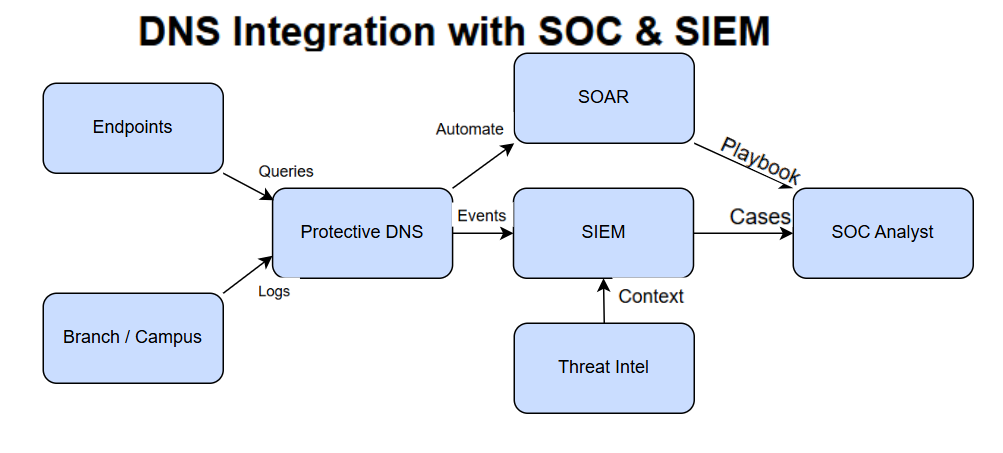
Figure 4: SOC/SIEM integration architecture for protective DNS
A resilient Protective DNS deployment relies on a multi-tier architecture that delivers policy enforcement, visibility, and operational resilience without creating single points of failure. While implementations vary across organizations, mature PDNS architectures typically include the following components:
| Architectural Component | Technical Requirements & Enforcement Actions |
|---|---|
| Edge Recursive Resolvers | Provide localized, high-availability DNS services across campuses, branches, data centers, and cloud environments. |
| Centralized Policy Engine | Applies context-aware security and authorization policies across the organization. |
| Threat Intelligence Pipeline | Continuously updates protections against malicious domains, phishing infrastructure, and command-and-control networks. |
| Enterprise Security Sinkhole | Redirects suspicious traffic to controlled infrastructure for containment and analysis. |
| SIEM / SOAR Forwarding | Enables real-time visibility, correlation, investigation, and automated response workflows. |
As organizations mature their Zero Trust initiatives, DNS architectures should be designed not only for availability, but also for security enforcement, visibility, and rapid response.
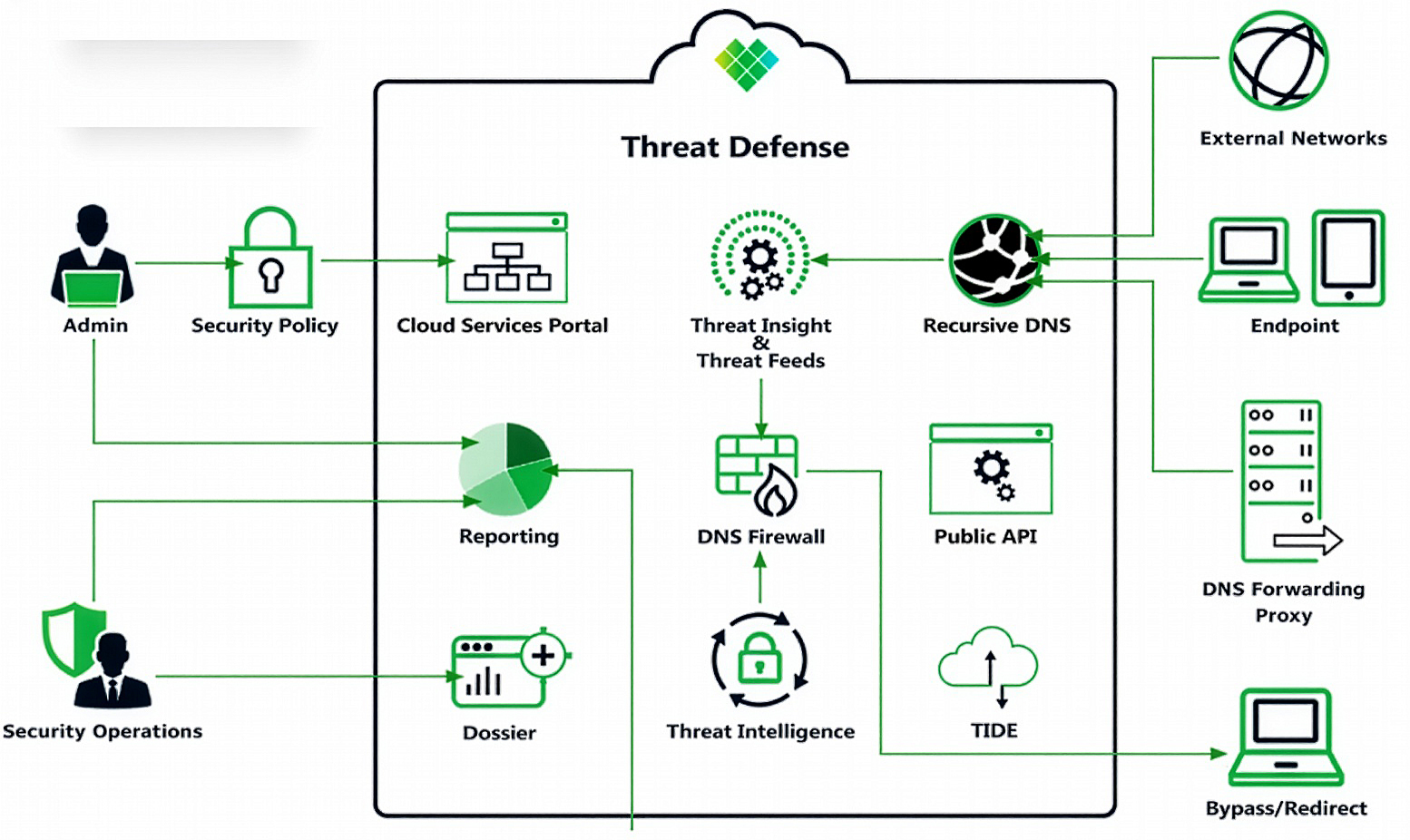
Figure 5: Reference architecture
Regardless of the deployment model, successful PDNS implementations follow several common design principles. Organizations should prefer centralized policy management with localized resiliency, preserve visibility for managed encrypted DNS rather than allowing uncontrolled resolver bypass, and treat DNS logging as security telemetry rather than simply infrastructure telemetry. The use of sinkholes for containment and measurement, along with rigorous testing of business-critical domains before policy changes are broadly enforced, can help balance security with operational resilience. Exceptions should be documented and reviewed regularly to ensure governance remains effective over time
Implementing a Protective DNS (PDNS) architecture provides powerful security benefits, but operational missteps often compromise its effectiveness. When enterprises treat PDNS as a passive infrastructure service rather than an active security control, they create systemic blind spots.
Some of the most common mistakes include:
Allowing disparate network teams to configure independent forwarders can create inconsistent policy execution and fragmented logging.
Many organizations focus on internet-bound traffic while leaving internal Active Directory, cloud infrastructure, and lateral DNS activity unmonitored.
Logging raw IP addresses without correlating them to users, DHCP records, or asset inventories makes investigations significantly more difficult.
Returning NXDOMAIN or REFUSED responses prevents communication but also eliminates opportunities to collect valuable threat intelligence. Sinkholing preserves observability and helps measure the scope of compromise.
Applying aggressive threat intelligence controls uniformly across all environments can inadvertently disrupt legitimate business applications, cloud services, and third-party APIs.
Successful organizations balance protection with operational resilience through context-aware policies and continuous policy tuning.
Organizations looking to strengthen Zero Trust enforcement through DNS should begin with a structured implementation approach. The following considerations can help establish a strong foundation for a Protective DNS (PDNS) program.
Identify all authoritative and recursive DNS servers, forwarders, cloud-based DNS services, and external resolution paths across the hybrid environment. Understanding the existing DNS landscape is the first step toward effective governance.
Ensure users, endpoints, and workloads utilize approved enterprise resolvers. Limiting unauthorized DNS paths helps maintain consistent policy enforcement and visibility.
As DNS over HTTPS (DoH) and DNS over TLS (DoT) adoption grows, organizations should establish approved encrypted DNS paths and manage them through endpoint, browser, and device policies.
Connecting enterprise threat intelligence feeds with DNS policy engines enables automated protection against malicious domains, phishing infrastructure, and command-and-control networks.
Integrate DNS telemetry with SIEM and SOAR platforms to improve visibility, investigation, and incident response workflows. Enterprises should also consider sinkholing capabilities to improve containment and threat analysis.
CISOs and Security leaders should move beyond vanity metrics such as "total domains blocked" and focus on measures that reflect risk reduction, visibility, and operational effectiveness.
Useful measures include:
These metrics track how effectively PDNS functions as an active control point to minimize adversarial dwell time.
These metrics measure the elimination of shadow infrastructure and the enforcement of uniform corporate policy paths.
Security controls must never introduce fragility into core business applications. These metrics track availability and latency overhead.
For many organizations, the journey toward Zero Trust begins with modernizing foundational services such as DNS, DHCP, and IP Address Management (DDI).
A recent transformation initiative undertaken by Microland highlights this shift. The customer was operating a distributed DNS and DHCP environment built on legacy infrastructure, with fragmented management, limited asset visibility, and growing exposure to DNS-layer threats. To address these challenges, the organization modernized its DDI environment through a centralized cloud-managed platform that combined DNS, DHCP, IPAM, and DNS security capabilities.
The transformation improved visibility into DNS activity and asset ownership, strengthened DNS-layer threat protection, enabled tighter integration with security monitoring processes, and established a scalable foundation for future growth and security initiatives. More importantly, it demonstrated how DNS can evolve from a foundational network service into a strategic control point for governance, resilience, and cyber defense.
As more organizations pursue Zero Trust architectures, similar modernization initiatives are helping bridge the gap between traditional network infrastructure and proactive security operations. DNS is increasingly becoming the connective layer that enables visibility, policy enforcement, and threat intelligence at enterprise scale
And that is perhaps the most important shift underway. DNS is no longer just an infrastructure service that keeps applications reachable. It is becoming a strategic security control that helps organizations make better trust decisions before a connection is ever established.
DNS is often treated as background infrastructure. In reality, it has become one of the earliest and most effective control points in a Zero Trust architecture.
It provides a rare combination of:
The most mature organizations do not rely on DNS alone.
Instead, they position DNS as an early decision point within a broader ecosystem of identity, endpoint, network, cloud, and SOC controls.
Because in modern enterprise security, the most important question is no longer:
"Can users reach the destination?"
It is:
"Should they be allowed to reach it in the first place?"